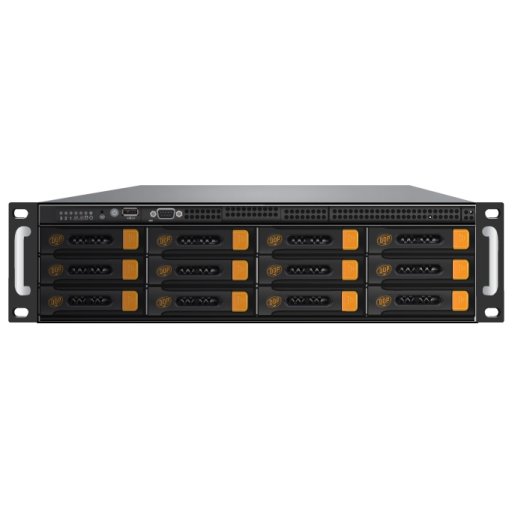
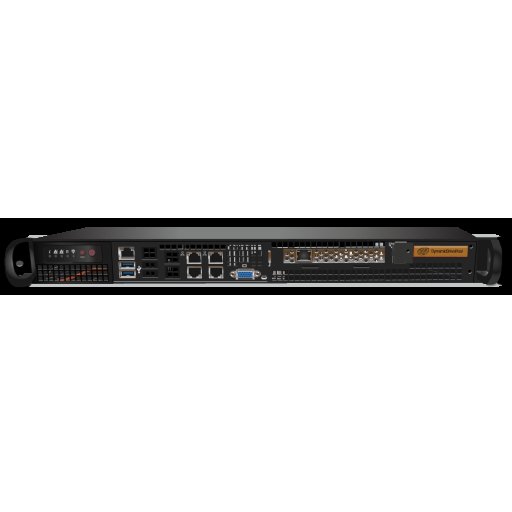
Ardis DDP
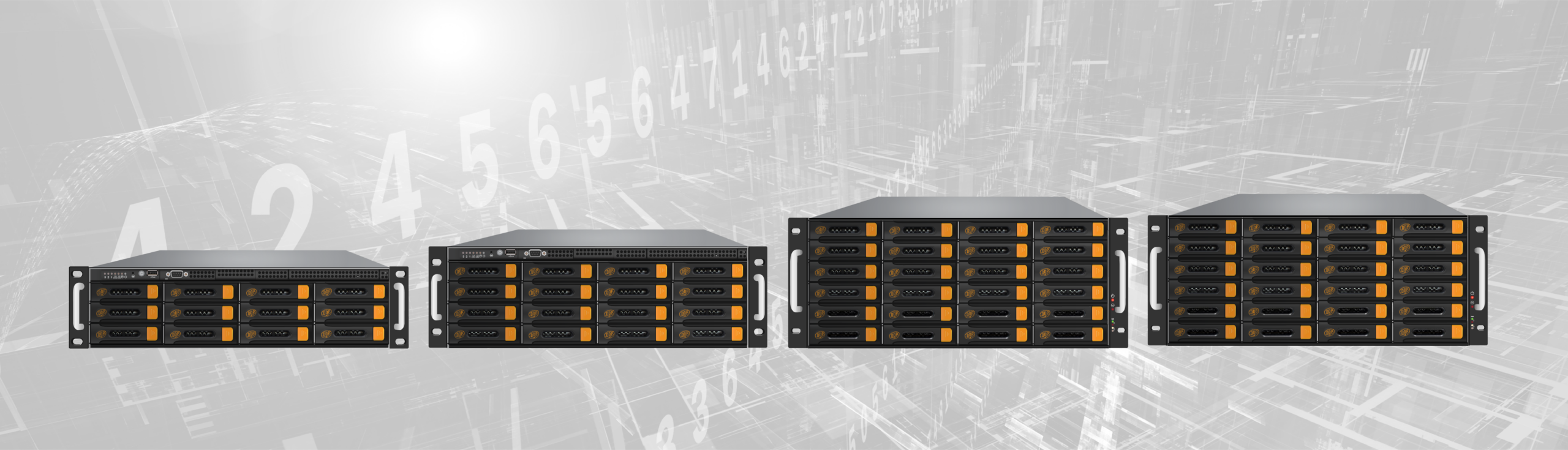
DDP - Dynamic Drive Pool
High-performance shared storage optimised for media & entertainment workflows
What is a DDP?
DDP stands for Dynamic Drive Pool, a powerful shared storage solution designed specifically for demanding multimedia workflows.
Manufactured by Ardis Technologies in Arnhem, Netherlands, every DDP is an Ethernet SAN that allows multiple workstations — Windows, macOS, and Linux — to access the same files simultaneously, regardless of file size. Since 2003, DDP products have been sold worldwide through a selection of authorised resellers, including Mediaspec. Customers range from post-production facilities, broadcasters, and rental companies to universities, colleges, schools, and houses of worship.
With its hybrid architecture (HDD + SSD), intuitive browser-based Control Panel, and support for massive capacity and bandwidth, DDP is the ideal solution for seamless 4K, 8K, and uncompressed video workflows.
As an appointed reseller of the DDP, Mediaspec proudly supports a growing roster of satisfied clients across academia, media, and the public sector. Among the institutions that rely on Mediaspec for seamless content delivery are the Welsh Assembly, Northumbria University, Canterbury Christ Church University, Blazing Griffin, Savalas Post, University of Sunderland, Big Mouth Audio, Kelvin College, City of Glasgow College, Ulster University, Waddell Media, plus many more thriving partners. Their success stories underscore the reliability, scalability, and ease‑of‑use that define DDP. To see the impact in action, read our case study on Northumbria University here.
Who Benefits from a DDP?
Educational Institutions
Universities and film schools needing centralised, secure storage for students and staff.
TV & Film Post-Production
Facilities requiring real-time collaboration on high-resolution video projects.
Music Studios
Multi-room facilities that need fast, low-latency shared storage for Pro Tools and other DAWs.
Broadcast & Live Events
Rental companies and broadcasters needing reliable centralised storage on location or in the facility.
What is DDP Best Known For?
DDP is renowned for its unique and innovative Project Caching technology, which delivers the speed of SSDs alongside the capacity of traditional hard drives.
With Project Caching, each project's data is automatically stored and optimised for performance, without any manual setup. Transfers between SSD cache and hard drives occur seamlessly in the background, ensuring fast and reliable access for everyone on your team.
To maintain peak efficiency, it's recommended to allocate a RAID-protected cache of around 10% of the total storage. This approach ensures critical project files enjoy the speed of SSDs, while larger datasets utilise the capacity of HDDs. This proprietary caching method is a game-changing feature of DDP, unmatched by other shared storage solutions.
Why Choose a DDP?
✓ Real-time collaboration with ultra-low latency
DDP uses a full block-level Ethernet SAN architecture, meaning client workstations access storage directly at the block level — not through slower file-sharing protocols like SMB or NFS. The result is latency comparable to a locally attached drive, even when multiple editors are simultaneously working on the same project.
✓ Customisable storage management and allocation
Rather than a one-size-fits-all volume, DDP gives administrators granular control: create dedicated Folder Volumes per project or department, assign storage quotas on a per-volume basis, and adjust allocations dynamically as project demands change — all without moving or reorganising data.
✓ RAID protection against drive failure
All DDP systems distribute data across multiple independent RAID groups. This not only protects against individual drive failure, but enables the system to continue operating and serving data to clients while a failed drive is replaced — minimising any disruption to production.
✓ SSD caching for significantly faster performance
Unlike competing systems that apply a global cache setting, DDP allows SSD caching to be configured on a per-volume basis. High-priority projects can be assigned dedicated cache, ensuring consistent performance where it matters most, without cache contention from lower-priority workloads.
✓ Auto-mounting of volumes on desktop login
DDP integrates with user account management so that the correct volumes are automatically mounted when a user logs in. Editors and students see exactly the storage they need — and nothing more — without manual configuration or IT intervention for each session.
✓ Easy-to-use web-based administration
The browser-based Control Panel requires no client software on the administrator’s machine. System health, volume usage, user permissions, and RAID status are all visible and configurable from a single interface, accessible from any device on the network.
✓ Highly scalable architecture
DDP systems are designed to grow with your organisation. Additional DDP units or third-party storage arrays can be added to an existing deployment without disrupting live workflows. Capacity and bandwidth scale independently, allowing you to address specific bottlenecks as they emerge.
✓ Broad application compatibility
DDP is validated with the leading professional media applications, including Avid Pro Tools, Avid Media Composer, Blackmagic DaVinci Resolve, Adobe Creative Cloud, Apple Final Cut Pro, Grass Valley, Dalet, Fairlight, and Sony. If your facility relies on any of these tools, DDP is designed to support them natively.
Pricing
The HyperDDP 12D system costs only £12,500 plus VAT and includes 36TB of RAW storage
Higher models offer greater flexibility in storage, networking, and bandwidth. Thanks to the modular architecture, you can expand capacity and performance step-by-step as your needs grow. Contact our team for a quote tailored to your requirements.
Key Technologies
SSD Caching
SSDs can handle the demanding read/write cycles of audio and video production, but their cost still exceeds that of traditional hard drives. A hybrid system combining SSDs and spindle-based HDDs can take advantage of intelligent caching to get the best of both. Unlike other manufacturers who apply a global cache setting across the whole system, DDP lets you configure caching on a per-volume basis — aligning cache allocation directly with project priority for a markedly more efficient workflow.
Load Balancing
Rather than relying on one massive RAID array, a DDP spreads data across several smaller RAID groups. This Load Balancing prevents any single group from becoming a bottleneck. As additional disks and RAID sets are introduced, access latency drops and overall throughput climbs. Because the workload is shared among multiple, evenly utilised groups, no single segment becomes congested — allowing the storage subsystem to sustain far higher data rates than a single, oversized RAID configuration could ever achieve.
Folder Volumes
Unlike traditional file-based NAS systems, DDP lets you turn any folder into a virtual Folder Volume. Once created, these mount on client desktops and behave like normal internal drives with full block-level access. For example, Avid Media Composer always places media files in a “MediaFiles” folder at the root of a volume. On a large shared system this quickly becomes disorganised. With Folder Volumes, administrators can create a dedicated volume per project, keeping everything clean and simple to manage — without any underlying data restructuring.
Quotas & Permissions
DDP supports per-volume storage quotas, allowing administrators to allocate guaranteed space for each volume. Access control permissions (read / write / delete) can be configured per individual user, desktop, or user group. Quota control is dynamic: when a job needs a burst of additional space, the quota can be temporarily expanded and snapped back once ingest is complete — without the overhead of reshuffling data.
Ardis Virtual File System (AVFS)
At the heart of every DDP is the proprietary Ardis Virtual File System (AVFS), which seamlessly manages any combination of HDDs and SSDs while delivering outstanding performance and reliability. A DDP system enables full project and file-level sharing, utilising almost 100% of the available Ethernet bandwidth.
Log In and Go
Managing users in a storage system doesn’t have to be complex. DDP can be configured to automatically mount individual volumes based on the user’s account — so the correct volumes simply appear when someone logs in, without needing to access the DDP backend or connect through additional client software.
In environments with a high turnover of users — such as educational institutions where students enrol and graduate each year — administration can otherwise become cumbersome. With DDP, user accounts can be created, grouped, and assigned access to Folder Volumes in an automated way using scripts or Excel exports from Active Directory, saving administrators significant time and effort.
The DDP Product Range
Six product families cover everything from portable field production to petabyte-scale broadcast infrastructure. All systems run the Ardis Virtual File System (AVFS) and are managed through the same browser-based Control Panel.
HyperDDP 12D
Entry-level — from £15,000 + VAT
The entry point to the DDP ecosystem. The HyperDDP 12D is a hybrid HDD + SSD Ethernet SAN suited to smaller teams of 4–8 workstations working with compressed or lower-resolution media. It delivers solid shared storage performance without the complexity or cost of higher-tier systems, and is fully expandable should your requirements grow.
Note: Comes with 1 year of support rather than the standard 2-year warranty that applies to all other DDP models.
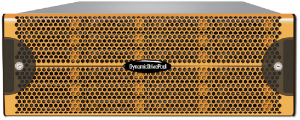
Hybrid DDP Series
DDP12D • DDP16D • DDP24D • DDP24DF
The workhorse of the DDP range. These modular Ethernet SAN servers have the file system and metadata management built in, supporting Windows, macOS, and Linux simultaneously. They sit between the entry-level HyperDDP and the high-end DDP10EF, and are the most widely deployed DDP systems in post-production facilities, music studios, and universities. Capacity and bandwidth scale as you add drives or attach additional storage — making these the natural upgrade path for facilities outgrowing simpler solutions.

Micro DDP Series
Compact shared storage for studio and field
Quiet, lightweight (around 5 kg), and designed for low power consumption without compromising performance. Configurable with RAID 5 or RAID 6 protected SSDs or HDDs, with capacities from 8TB to 60TB and throughput of up to 2,200 MB/s. The microDDP is widely used for festivals, concerts, award events, and live sports — a go-to choice for rental companies and broadcasters who need reliable shared storage on location. Equally strong for smaller studios, education environments, and anyone who needs a capable system in a compact, portable footprint.
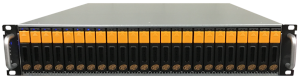
Mini DDP24DF
Modular SSD performance in a compact chassis
A modular, high-speed DDP that accepts up to 24 SSDs and expansion cards. The Mini DDP24DF sits between the microDDP and the full Hybrid Series, aimed at facilities that need all-SSD performance in a compact chassis without stepping up to DDP10EF pricing. A strong fit for edit suites or facilities with specific per-project performance requirements that a hybrid system cannot meet.

DDP10EF
Extremely Fast NVMe Storage
Designed for 8K uncompressed video editing and the most demanding bandwidth-intensive workflows. Using NVMe flash storage and the NVMe-oF / RDMA protocol, the DDP10EF can deliver more than 15 GB/s on a Linux desktop and up to 100 Gbits per workstation. This is the right choice when you need the absolute maximum in storage performance and latency cannot be compromised.

High Availability DDPs
Dual HA DDP Head — AVFS Flexible Storage
Built for large broadcasters and facilities where any downtime is unacceptable. The Dual HA DDP Head runs in active/active configuration, supporting FC, iSCSI, NVMe-oF / RDMA, and Infiniband. Bandwidth of up to 200 GbE/s. It can integrate third-party and legacy storage arrays alongside DDP hardware, and scales to petabyte capacity. For enterprise buyers and mission-critical broadcast environments, this is the top of the DDP range.
Technical Specifications at a Glance
For full configuration options and pricing, contact our team.
| HyperDDP 12D | Hybrid DDP Series | Micro DDP | Mini DDP24DF | DDP10EF | Dual HA DDP Head | |
|---|---|---|---|---|---|---|
| Form factor | 2U | 2U-4U | 1U | 2U | 1U | 1U |
| Drive types | SSD + HDD | SSD + HDD | SSD (4 or 8) | SSD | NVMe | Dependent on arrays |
| Max bandwidth | Up to 2.5 GB/s | Up to 6.9 GB/s | Up to 2.5 GB/s | Up to 6.9 GB/s | Up to 30 GB/s | Up to 200 GbE/s |
| Networking | 10/25/40/100GbE | 10/25/40/100GbE | 25GbE | Contact us | NVMe-oF / RDMA | FC, iSCSI, NVMe-oF, Infiniband |
| RAID support | RAID 5/6 | RAID 5/6 | RAID 5/6 | RAID 5/6 | RAID 5/6 | RAID 5/6 |
| OS support | Win / macOS / Linux | Win / macOS / Linux | Win / macOS / Linux | Win / macOS / Linux | Win / macOS / Linux | Win / macOS / Linux |
| High availability | Optional | Optional | No | No | No | Yes (active/active) |
| Max capacity | Expandable | Expandable | Up to 60TB | Contact us | NVMe config dependent | Petabyte-scale |
| Warranty | 1 year | 2 years | 2 years | 2 years | 2 years | 2 years |
| Starting price | From £15,000 + VAT | Contact us | Contact us | Contact us | Contact us | Contact us |
Common to all models: AVFS file system • Browser-based Control Panel • Per-volume quotas • Per-user/group permissions • Active Directory integration • Remote support via secure SSH tunnel
DDP vs Avid NEXIS — Which Is Right for You?
Both DDP and Avid NEXIS are professional Ethernet-based shared storage systems designed for demanding media workflows. Mediaspec sells both, and the right choice depends on your facility’s priorities.
| DDP | Avid NEXIS | |
|---|---|---|
| Best for | Mixed-platform, multi-application facilities | Avid-centric workflows |
| Architecture | Ethernet SAN (block-level) | NAS / VFS |
| OS support | Windows, macOS, Linux | Windows, macOS |
| Concurrent clients | No hard limit — scales with available RAM | 40 (Foundation) / 165 (SDA) / 330 (Advanced) — licence-gated tiers |
| Block size | 256 KB | 1 MB — can cause inefficiency with large numbers of small files (e.g. Pro Tools fade files) |
| Admin interface | Browser-based, no client software required | System Director appliance |
| Scalability | Modular; integrates third-party arrays | Scales within Avid ecosystem |
| App compatibility | Application-agnostic | Optimised for Avid tools |
| Warranty | 2 years (1 year on HyperDDP 12D) | Varies by model and support tier |
Not sure which is the better fit for your facility? Call our team on 01355 272500 and we can talk through your requirements in detail.
Service & Warranty
Standard Warranty
Every DDP system purchased through Mediaspec is covered by a 2-year manufacturer’s warranty from Ardis Technologies, covering hardware defects and component failures under normal operating conditions. The one exception is the entry-level HyperDDP 12D, which comes with 1 year of support.
Under the warranty, Ardis Technologies will — at no charge and at its option — repair or replace any part of the product which proves defective by reason of improper workmanship. In the event of a drive failure, a replacement component is typically shipped within two business days of the fault being identified.
Extended Support
Support can be extended by a further five years beyond the standard warranty period. Hardware and software support can be purchased together or separately on an annual basis, with pricing dependent on the DDP model. Extended support is only available for systems currently under an active support contract, though reinstatement may be considered in some circumstances.
Remote Connection Requirement
A remote connection is mandatory for warranty and support, and should be tested at installation. This is how Ardis diagnoses and resolves issues — both hardware and software problems are addressed remotely in the first instance.
The recommended approach is a service connection where the operator decides when to initiate the remote session. During the connection, a secure shell tunnel is established via port 22 outgoing to a fixed address at Ardis Technologies. If a customer has security concerns about this approach, Ardis will work with them to agree an alternative remote access method.
Mediaspec’s Role
As an authorised Ardis reseller, Mediaspec can provide an optional support package throughout the warranty period and beyond. If you experience an issue, our team can act as a direct point of contact — coordinating with Ardis on your behalf to minimise disruption to your workflow.
For facilities requiring extended coverage or enhanced service-level agreements — such as guaranteed response times or on-site support — please contact us directly to discuss the options available.
Frequently Asked Questions
Not Sure Which DDP Is Right for You?
Choosing the right shared storage system is a significant decision, and the best configuration depends on factors specific to your facility — the number of workstations, the resolution and codec of your media, your existing network infrastructure, and your plans for growth.
Our team has extensive experience specifying and deploying DDP systems across post-production, broadcast, education, and music production environments. We are happy to discuss your requirements in detail and recommend a system that fits both your workflow and your budget.
- 📞 Call us: 01355 272500
- ✉ Email: info@mediaspec.co.uk
- 💬 Online: Use our contact form and we will get back to you promptly.